This article is part of our 365-day renewal strategy guide.
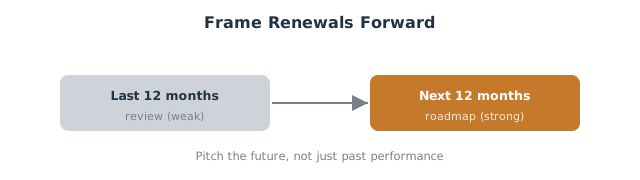
The best renewal conversations are framed around the next 12 months, not the last. Instead of only reviewing past performance, you pitch the future roadmap, the outcomes the customer will achieve next, so renewing becomes a decision to keep moving forward. A forward-framed renewal conversation shifts the customer from evaluating what they got to anticipating what they will get, which makes the successful renewal the natural next step.
A backward-looking renewal invites scrutiny; a forward-looking one invites commitment. This guide covers what a renewal conversation is, why forward-framing works, and how to run one.
What Is a Renewal Conversation?
A renewal conversation is the discussion (or series of discussions) where a customer decides whether to renew. It is not a single call at the renewal date; the strongest renewal conversations start 60 to 90 days ahead and build on the value proven all year.
Most teams treat it as a retrospective: “here’s what you used, please renew.” That framing puts the customer in evaluation mode, comparing past value against price. Forward-framing flips it: the conversation becomes about the customer’s goals for the next 12 months and how you will help achieve them.
Why Forward-Framing Wins Renewals
Pitching the roadmap rather than the rear-view mirror works because:
- It changes the question. From “was this worth it?” to “what could we do next?”, which is far easier to say yes to.
- It deepens the relationship. Talking about the customer’s future goals positions you as a partner, not a vendor.
- It builds trust. Showing new features and a clear plan signals momentum and investment in their success.
- It opens expansion. A future-focused conversation naturally surfaces new use cases and expansion opportunities.
Of course, forward-framing only works on a foundation of proven value; the future pitch is credible because the past delivered.
How to Run a Forward-Framed Renewal Conversation
- Open with their goals. Start with the customer’s objectives for the coming year, not your usage stats.
- Briefly prove the past. Acknowledge results delivered (enough to establish credibility), then pivot forward.
- Pitch the roadmap. Show the new features and capabilities coming and tie each to the customer’s goals.
- Co-create the plan. Build a joint success plan for the next 12 months with milestones, so the renewal is a shared commitment.
- Make renewal the obvious next step. Position renewing as continuing a plan already in motion, not a transaction to re-justify.
Run this through a structured executive business review so the right stakeholders hear the forward story.
Examples of Forward-Framed Renewal Conversations
- Instead of “you logged in 400 times,” a CSM says “here’s the outcome you hit, and here are the three things we’ll achieve together next year.”
- Rather than emailing a renewal quote, the account manager runs a roadmap session, then sends the renewal as the formalization of an agreed plan.
- A CSM uses AI for customer success to surface usage trends and proactively proposes the next milestone, deepening the relationship before the renewal date.
Renewal Conversation Best Practices
A few best practices make the customer renewal conversation consistently effective:
- Start early and proactively. Begin the renewal process 60 to 90 days out. CSMs who wait until renewal time are reacting, not leading.
- Ground it in data. Use product usage and customer health data to make the conversation specific, and quantify ROI so the value is undeniable.
- Tie it to onboarding goals. Reconnect to the objectives set during onboarding, closing the loop from first value to next year.
- Deepen relationships. Use the conversation to build trust and broaden stakeholder relationships, reinforcing your renewal strategies with multi-threading.
- Make it strategic, not transactional. Strategic customer success treats every renewal as a checkpoint in a longer partnership aimed at the customer’s business growth.
These customer success renewals practices, run consistently by CSMs and customer success managers, lift customer retention and reduce churn. Tools that surface usage and health signals (including AI for customer success, and platforms like ChurnZero) help sales teams and CS teams spot the right moment and make the renewal conversation actionable rather than generic. The goal is simple: every existing customer should enter their renewal already knowing the plan for the next year.
Frequently Asked Questions
What is a renewal conversation? The discussion where a customer decides whether to renew, best started 60 to 90 days ahead and framed around future goals rather than just past usage.
Why frame renewals around the next 12 months? Forward-framing changes the question from “was it worth it?” to “what’s next?”, which deepens the relationship, builds trust, and opens expansion.
How do you run a forward-framed renewal conversation? Open with the customer’s goals, briefly prove past results, pitch the roadmap tied to those goals, co-create a 12-month plan, and make renewing the obvious next step.
What is the purpose of a renewal meeting? To align on the customer’s future goals and how you will help achieve them, so the renewal is a commitment to a shared plan, not a transaction.
When should the renewal conversation start? 60 to 90 days before the renewal date, building on value proven across the whole contract term.
Forward-framing is how you close the 365-day renewal strategy: proving the past, then selling the future.
Renewals are easier to win when they’re about tomorrow, not yesterday. SWOTBee builds renewal and customer success programs for mid-market companies across Energy, Manufacturing, and SaaS.
Get your 1-page renewal leakage estimate →
No call needed. Prefer to talk it through first? Book a free 30-minute discovery call →