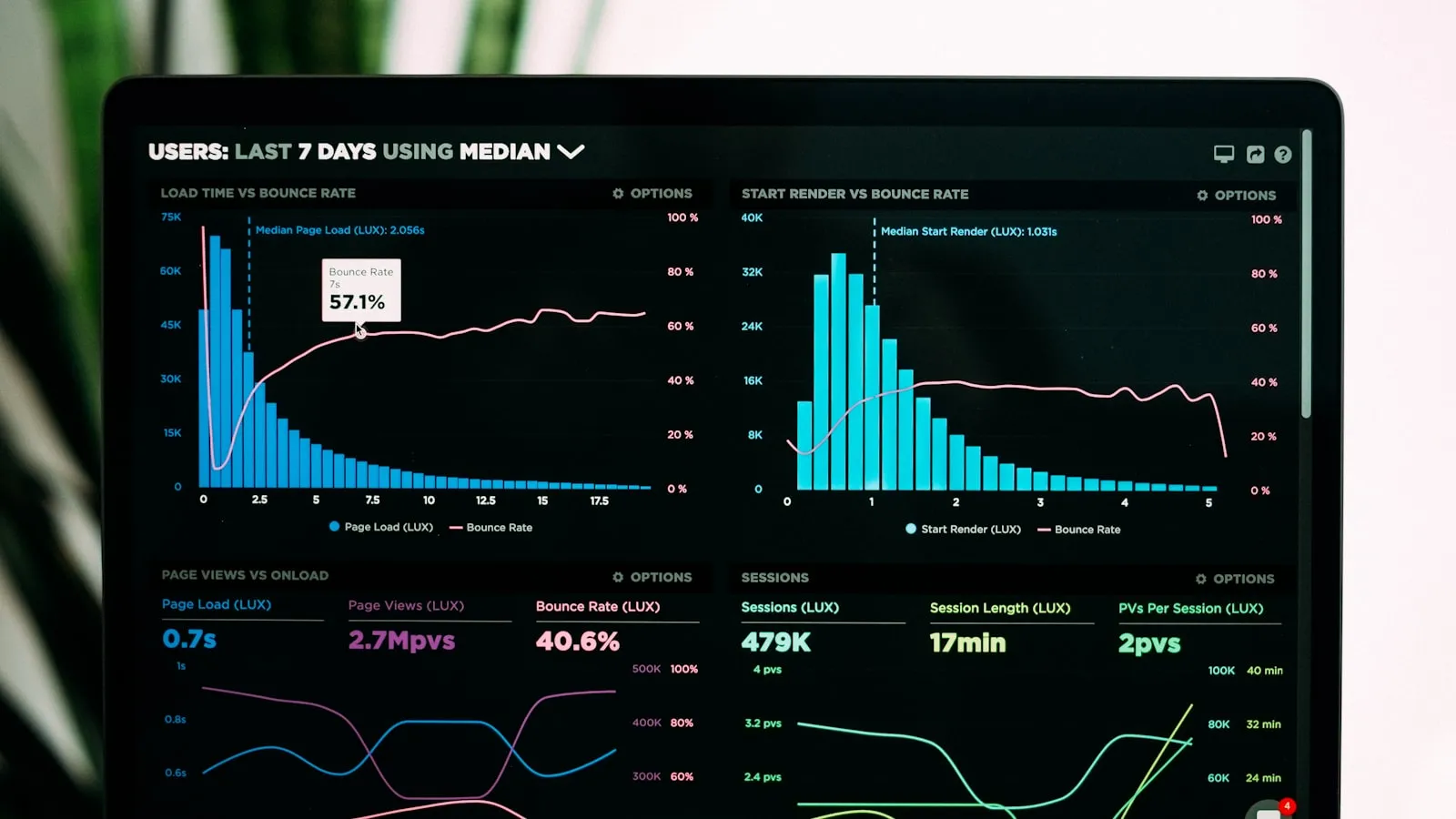
Product usage data, logins, feature adoption, seat utilization, tells you something a HubSpot deal record on its own cannot: whether the customer is actually getting value, right now, independent of how the relationship feels in the last call. Getting that data out of a product analytics tool like Pendo, Mixpanel, or Amplitude and into HubSpot means a renewal owner can see a usage-health signal on the deal itself, instead of guessing from email response times and gut feel. This guide covers the integration architecture, what to actually sync, and, honestly, what usage data can and cannot tell you about a coming renewal.
What Usage Data Actually Tells You (and What It Doesn’t)
Before wiring anything up, it’s worth being straight about what this data buys you. The instinct is to treat product usage as the renewal predictor: if usage is up, the account renews; if it’s down, it churns. The most detailed available research on this exact question doesn’t support that. In a real-company study, none of the individual usage metrics tested, login-based usage, feature stickiness, a composite health-score total, were statistically significant predictors of renewal once relationship-strength was in the model. A pricing signal (average license rate) outranked every usage-only metric tested. We cover the full findings in which product usage metric actually predicts renewal.
That doesn’t make usage data worthless, it makes it one input, not the input. What it reliably does well:
- Flags a conversation you’d otherwise miss. A steep drop in logins or feature use three months before renewal is a fact worth raising in the renewal call, even if it isn’t, by itself, statistical proof the account will churn.
- Backs up (or contradicts) what the account team believes. A renewal owner who feels good about an account but is looking at zero logins in 60 days has new information. A renewal owner who’s nervous about an account that’s heavily used every day has a reason to be less nervous.
- Feeds a broader health score, combined with relationship and commercial signals, rather than standing in for one. See building a churn prevention workflow in HubSpot for how the pieces combine into an actual health score and alert system.
Treat what follows as: how to get the signal into the room, not how to get a crystal ball.
Three Ways to Get Usage Data Into HubSpot
The mechanism you pick depends mostly on engineering capacity, not on which analytics tool you use.
| Method | How it works | Best for |
|---|---|---|
| Native app integration | The analytics vendor’s own HubSpot marketplace app pushes usage properties directly onto the contact or company record | Teams with no engineering resources to spare; works out of the box if the vendor has a real two-way integration |
| Reverse ETL | A no-code sync tool (Census, Hightouch) reads from the analytics tool’s warehouse export or API and writes chosen fields to HubSpot on a schedule | Teams that want control over exactly which fields sync and how they’re transformed, without writing custom code |
| Custom API sync | A script or middleware (Zapier, Make, or custom code) calls both APIs directly | Teams with engineering capacity who need account-level rollups or logic the native integration and reverse-ETL tools don’t support |
Pendo ships the most complete native two-way HubSpot integration of the three, it’s covered in detail in our Pendo HubSpot integration guide, including what syncs, what it costs, and where it hits limits. Mixpanel and Amplitude both have thinner native HubSpot connectors focused on marketing event data rather than account-level product usage rollups, so most teams end up on reverse ETL or a custom sync to get renewal-relevant fields onto the deal. See our dedicated guides: Mixpanel to HubSpot and Amplitude + HubSpot.
If you haven’t picked a tool yet, our comparison of Pendo, Mixpanel, and Amplitude for HubSpot renewal teams walks through which one fits a HubSpot-centric team with limited engineering resources versus one with a dedicated data function.
What to Sync: Renewal-Relevant Usage Properties
The mistake most teams make is syncing raw event data, individual clicks and page views, onto the contact record. That’s noise a renewal owner can’t act on. What belongs on the deal is a small number of account-level rollups:
- Last active date (account-level). Not per-user, the most recent activity across the whole account. A single power user logging in daily can mask a churning account if nine other seats have gone quiet.
- Percentage of seats active in the last 30 days. Seat utilization is one of the clearer proxies for whether the customer is getting the value they’re paying for, especially for seat-based pricing.
- Core feature adoption count. How many of the product’s “sticky” features (the ones correlated with retention in your own usage data, not a vendor’s generic benchmark) the account has actually used.
- Usage trend direction. Up, flat, or down versus the prior 30- or 90-day period. The direction matters more for a renewal conversation than the absolute number: flat-but-low usage on a long-tenured account reads differently than a sharp recent drop.
Keep the raw event stream in the analytics tool, where it’s built to live. Sync only the summarized signal to HubSpot, where the renewal owner actually works.
Copy This: A Minimal Usage Health Score You Can Build in HubSpot This Week
You don’t need a data team or a scoring engine to start. Here’s a scoring model built entirely from the four properties above, that you can create as a single HubSpot property with a workflow calculation, no external tooling required.
Step 1. Create four custom properties on the Company or Deal object:
| Property name | Field type | Source |
|---|---|---|
usage_last_active_days | Number | Days since last account activity |
usage_seat_utilization_pct | Number | % of seats active in last 30 days |
usage_core_features_adopted | Number | Count of core features used, out of your defined set |
usage_trend_direction | Dropdown (Up / Flat / Down) | 30-day usage vs. prior 30-day period |
Step 2. Score each on a 0-25 point scale, for a 100-point total:
usage_last_active_days:        0-7 days = 25 pts   |  8-30 = 15 pts  |  31+ = 0 pts
usage_seat_utilization_pct:    70%+ = 25 pts        |  40-69% = 15 pts |  <40% = 0 pts
usage_core_features_adopted:   3+ features = 25 pts |  1-2 = 15 pts   |  0 = 0 pts
usage_trend_direction:         Up = 25 pts          |  Flat = 15 pts  |  Down = 0 pts
Step 3. Build a HubSpot workflow that sums the four into a single usage_health_score property (0-100) and re-runs it on a schedule (daily is enough). Add a branch: score under 40 sets renewal_risk_flag to “At Risk” and creates a task for the deal owner titled “Usage health dropped, review before renewal call.”
Step 4. Put the score on the deal record’s sidebar, not buried in a report. A renewal owner should see it the moment they open the deal, without running a dashboard.
This is deliberately simple: four inputs, even point weighting, no machine learning. That’s the point. A crude score a renewal owner actually looks at beats a sophisticated one buried in a BI tool. Once this is running and you have a few renewal cycles of data, revisit the weighting: if seat utilization turns out to matter more than feature count for your product, adjust the points, don’t just add more properties.
Turning the Signal Into an Action, Not Just a Property
A usage property sitting unused on a deal record is no better than a dashboard nobody checks. Once the data is syncing, it needs to trigger something:
- A workflow that flags the deal, not just updates a property, when usage trend crosses a threshold you define (for example, seat utilization drops below 40 percent, or 45 days pass with zero account activity).
- A task for the renewal owner, not a silent notification, so the flag sits in a queue until someone acts on it.
- Visibility on the deal record itself, in the same view where the renewal owner already works, not in a separate analytics dashboard they have to remember to check.
This is deal-workflow territory, not integration territory, and we cover the full build, health score formulas, alert workflows, churn-reason taxonomies, in building a churn prevention workflow in HubSpot.
Common Failure Modes
- Building the dashboard in the wrong system. If the usage signal lives in Pendo, Mixpanel, or Amplitude and not on the HubSpot deal, it competes with a dozen other tabs a busy renewal owner won’t open.
- Syncing everything instead of the few fields that matter. A contact record with forty usage properties is as unusable as one with none; nobody scans forty fields before a call.
- Treating a usage dip as certain churn. The research is clear that usage alone isn’t a reliable predictor. Use it to prompt a conversation, not to auto-flag an account as lost.
- Real-time sync nobody needed. Renewal cycles run in weeks and months. A daily batch sync is almost always enough, and far cheaper to build and maintain than a streaming pipeline.
- No account-level rollup. Per-user usage data without an account-level aggregate hides the real picture on multi-seat accounts, where a handful of active users can mask a mostly-dormant account.
Where to Go Next
- Setting up the integration itself: Pendo HubSpot integration, Mixpanel to HubSpot, Amplitude + HubSpot
- Choosing a tool: Best product analytics tools for HubSpot renewal teams
- Turning the signal into a workflow: Building a churn prevention workflow in HubSpot
- What the evidence actually shows: Which product usage metric actually predicts renewal
Frequently Asked Questions
Can product usage data predict which accounts will renew? Not reliably on its own. The most detailed available research on this exact question found that no single usage metric, login frequency, feature adoption, seat utilization, reliably predicted renewal once relationship-strength and pricing signals were in the model. Usage data is a useful input, not a standalone predictor. See our full research write-up on which usage metric actually predicts renewal.
What is considered product usage data? Any recorded fact about how a customer actually uses the product: logins and login recency, feature adoption breadth, session frequency, seat or license utilization, workflow completion, and time-to-value milestones. It’s distinct from CRM activity data (emails, calls, deal stage changes), which tracks your team’s actions, not the customer’s.
Should I use Pendo, Mixpanel, or Amplitude to feed HubSpot? It depends on your team’s engineering capacity and whether you’re already tracking product events. Pendo ships the most complete native two-way HubSpot integration with the least engineering lift. Mixpanel and Amplitude have deeper event-level analytics but thinner native HubSpot connectors, so getting granular data into HubSpot usually needs a reverse-ETL tool or custom API work.
How do I get usage data into HubSpot without engineering resources? Use the vendor’s native HubSpot integration if one exists (Pendo’s is the most complete) rather than building a custom sync. If your usage tool lacks a native integration or you need more control over what syncs, a no-code reverse-ETL tool (Census, Hightouch) is the next-lightest option before custom API work.
What usage properties should sync to the renewal deal, not just the contact? Account-level rollups, not individual user events: last active date across the account, percentage of seats active in the last 30 days, count of core features adopted, and trend direction (usage up, flat, or down versus the prior period). Raw event streams belong in the analytics tool; only the summarized signal belongs on the deal.
Does syncing usage data replace a customer health score? No, it feeds one. A health score combines usage data with relationship signals (support ticket volume, stakeholder engagement, NPS) and commercial signals (payment history, expansion history). Usage data alone answered honestly is one input among several; see our guide to building the actual health-score workflow in HubSpot.
How often should usage data sync to HubSpot? Daily is enough for renewal purposes; real-time sync is rarely worth the engineering cost for this use case. Renewal conversations run on a weeks-to-months cadence, not minutes, so a daily batch sync that updates a health-score property is sufficient, and far simpler to maintain than a streaming pipeline.
What’s the most common mistake teams make connecting usage data to HubSpot? Building a usage dashboard that lives outside HubSpot, in the analytics tool itself, that the renewal owner has to remember to check separately. If the signal isn’t visible on the deal record where the renewal is actually worked, it gets ignored the first time the team gets busy.
SWOTBee builds HubSpot-native renewal operations for mid-market teams: usage data synced onto the deal, health-score workflows, and alert cadences that actually get worked, all inside your portal, and you own everything we build.
Get your 1-page renewal leakage estimate →
No call needed. Prefer to talk it through first? Book a free 30-minute discovery call →