This guide covers the integration itself. For what to actually do with the product-usage data once it’s in HubSpot, see our guides to product-qualified signals and expansion and customer success in HubSpot.
Pendo’s HubSpot integration is a native, two-way sync, not a Zapier workaround: HubSpot contact and company data flows into Pendo, and Pendo’s product-usage events flow into HubSpot as properties and custom events. It’s a real, purpose-built connection maintained by Pendo, but it’s a paid add-on with no public price, runs on a nightly batch schedule rather than real time, and its value depends heavily on someone actually maintaining the mapping and event tagging behind it. This guide covers what it does, how to set it up, what it costs, and when the native integration isn’t enough on its own.
What the Pendo HubSpot Integration Actually Does
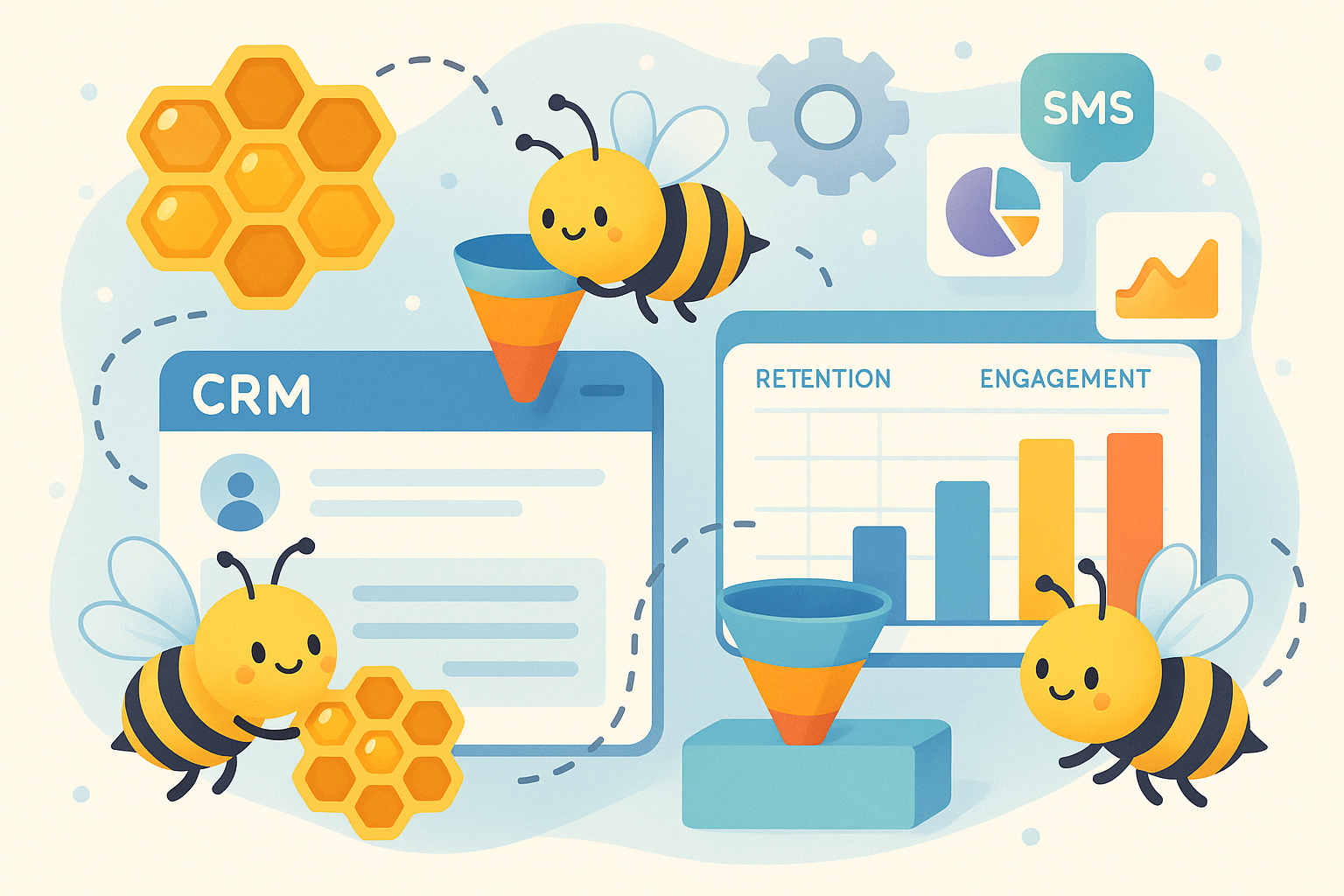
The integration has two distinct halves, and most vendor pages blur them together. Before you connect Pendo to HubSpot, it helps to understand both directions separately. The pull brings HubSpot Contact and Company data into Pendo, so Pendo’s account and visitor profiles are enriched with CRM context like lifecycle stage, deal status, or any custom HubSpot property you choose to map. The push is what actually gets Pendo into HubSpot in a form your team can act on: Visitor and Account metadata, plus optional Page, Feature, and Track events, land in HubSpot as properties and custom events on the matching Contact and Company records.
That second half is the part worth paying attention to. Once product-usage events exist as custom events in HubSpot, they can feed HubSpot’s own customer health scores, trigger workflows, and build lists for outreach, all without your CS or marketing team ever opening Pendo. Sales and marketing get a live view of product engagement; product and CS get CRM context without switching tools. It also replaces an older “legacy” HubSpot integration Pendo previously offered, if your instance still shows that version, confirm you’re not building new workflows on the connection that’s being phased out.
Is This the Right Integration for You?
Before setup, two prerequisites determine whether this is even available to you:
| Side | Requirement |
|---|---|
| Pendo | This is a paid add-on on top of your Pendo subscription. Pendo doesn’t publish pricing, existing customers are told to contact their account representative. |
| HubSpot | Works with any HubSpot tier, including HubSpot Free. No forced upgrade needed on the HubSpot side. |
Both platforms also require admin-level access to establish the connection. If you’re evaluating whether to buy the Pendo add-on at all, weigh it against what you’re actually trying to solve: if the goal is only “get some usage data into HubSpot,” a lighter reverse-ETL tool might be cheaper. If the goal is genuine two-way sync that both product and RevOps teams rely on daily, the native integration is the more durable choice, once you’ve priced it.
How to Set Up the Pendo HubSpot Integration
The setup itself, from Pendo’s own configuration flow, runs in seven steps:
- Start the integration. In Pendo, go to Settings > Integrations, find the HubSpot tile, and select Set up and activate.
- Connect to HubSpot. Authenticate the native connection to your HubSpot account, no separate middleware account needed.
- Map objects. Map Pendo Visitors to HubSpot Contacts, and Pendo Accounts to HubSpot Companies. These are two separate mapping steps, don’t skip one assuming the other covers it.
- Configure the pull. Choose which HubSpot properties flow into Pendo.
- Configure the push. Choose which Pendo metadata flows into HubSpot.
- Enable the integration. Nothing syncs until this is switched on.
- Send Core Events. Optionally push Page, Feature, and Track events into HubSpot as custom events.
Budget more time for step 3 than the interface suggests. Getting the field mapping and event tagging right the first time is what determines whether the data landing in HubSpot is actually useful six months from now, or just noise nobody trusts.
What Data Actually Syncs, and How Often
The sync is not real time. Pendo runs an initial sync of roughly 20 minutes after activation, then automatic nightly syncs between midnight and 6am in your subscription’s time zone. For most RevOps use cases, health scores, segmentation, save-play triggers, that cadence is fine; a churn signal from yesterday’s usage drop is still actionable today. If your use case genuinely needs near-real-time data (live in-app triggers reacting within minutes), the native integration alone won’t get you there, see the alternatives below.
Pendo’s in-app NPS surveys can also be part of what syncs, giving you a customer satisfaction signal alongside raw usage data, useful context for customer engagement scoring, though our own research on health scores suggests NPS-style sentiment correlates with retention less reliably than practitioners often assume, so weight it as one signal among several, not the anchor.
The Cost and Limitation Most Reviews Skip
Two honest points worth knowing before you build workflows on top of this:
- It costs money you won’t find published anywhere. The Pendo side is an add-on purchase, sales-assisted, no self-serve price. Get the actual number before assuming this is “included.”
- Underutilization is a documented, common outcome. Teams that turn the integration on without a dedicated Pendo admin to maintain feature tagging and account mapping tend to end up with shallow, unreliable data flowing into HubSpot, which then makes the whole integration look like it doesn’t work. The integration isn’t the risk; treating it as a one-time setup task is.
When Native Isn’t Enough: Middleware Alternatives
For teams that need faster-than-nightly sync, or want to combine Pendo and HubSpot data with a third system in one pipeline, middleware platforms like Tray.ai or Stacksync offer real-time two-way sync as a paid layer on top, roughly $1,000/month and up for a managed connection with monitoring and support. That’s a real cost premium over the native integration, worth it specifically when the nightly batch cadence is the actual blocker, not by default.
Troubleshooting Common Setup Issues
Most failed syncs trace back to one of three things: a permission gap (the connecting user lacks admin rights in one of the two systems), an expired authentication token that needs re-connecting, or a mapping change made after the integration was already live (renaming a HubSpot property the sync depends on breaks it silently). If data stops flowing, check those three before assuming the integration itself failed. To disconnect cleanly, turn off the sync in Pendo’s integration settings first, then revoke access on the HubSpot side, doing it in the other order can leave orphaned permissions behind.
Practical Use Cases for RevOps Teams
- Feed real usage into your health score, not just email opens and ticket volume. Our research on what actually predicts churn found relational and transactional signals often outperform usage-only data, Pendo events give you the usage half of that picture without manual exports.
- Trigger expansion plays from feature adoption, tying directly into product-qualified signals and expansion rather than waiting for a QBR to surface upsell whitespace.
- Give CS a single view without a second login. Once data from Pendo lives in HubSpot properties, CSMs working in the Customer Success Workspace see product engagement alongside deal and ticket history, one consistent view of the customer journey, customer interactions, and customer behavior instead of two disconnected tools.
- Personalize outreach and campaign targeting using real product data instead of guesswork, marketing can build a campaign around actual feature adoption, not assumed interest.
Done well, the integration doesn’t just automate data movement, it gives sales, marketing, and CS a shared, accurate picture of customer experience to optimize and integrate into how each team already works, without anyone needing a second login to get product insights.
Pendo isn’t the only path to this outcome. If you’re already on Mixpanel or Amplitude, see our guide to connecting product usage data to HubSpot renewals for how the same signal gets built with either tool, or our comparison of Pendo, Mixpanel, and Amplitude for renewal health if you’re still choosing.
Frequently Asked Questions
Does Pendo have a native HubSpot integration? Yes. Pendo’s two-way HubSpot integration is built and maintained by Pendo, not a third-party connector. It replaced an older, more limited “legacy” HubSpot integration, so if your instance still shows the legacy version, check Pendo’s upgrade path before building new workflows on it.
How much does the Pendo HubSpot integration cost? It is a paid add-on on the Pendo side, on top of your existing Pendo subscription. Pendo does not publish a price; existing customers are directed to contact their account representative. On the HubSpot side, it works with any tier, including HubSpot Free, so there is no forced HubSpot upgrade to use it.
How often does data sync between Pendo and HubSpot? Data pulled from HubSpot into Pendo runs an initial sync of roughly 20 minutes, then automatic nightly syncs between midnight and 6am (subscription time zone). This is a batch sync, not real time. Teams that need near-real-time sync typically add a middleware layer such as Tray.ai or Stacksync on top.
What data actually syncs between Pendo and HubSpot? Two directions: HubSpot Contact and Company properties pull into Pendo to enrich Visitor and Account records, and Pendo Visitor and Account metadata pushes into HubSpot as properties. Separately, Pendo Page, Feature, and Track events can be sent into HubSpot as custom events, which is what lets product usage feed HubSpot health scores and segmentation.
Do I need a dedicated admin to run this integration well? In practice, yes, for the value to show up. A common documented failure mode is teams turning the integration on, syncing basic fields, and then not maintaining feature tagging or account mapping, so the product-usage data going into HubSpot stays shallow. Budget for ongoing ownership, not just initial setup.
This guide pairs with our guides to product-qualified signals and expansion, customer success in HubSpot, and churn-prevention health-score workflows.
Most integration guides stop at “click connect.” SWOTBee builds the mapping, event tagging, and downstream workflows that turn customer data into customer insights your team actually acts on, not data sitting unused in a property field.
Get your 1-page renewal leakage estimate →
No call needed. Prefer to talk it through first? Book a free 30-minute discovery call →