This article is part of our honest guide to whether HubSpot scales with business growth.
HubSpot pricing at scale is far higher than the headline plan price, because the real cost combines per-seat fees, a marketing-contact tier multiplier, mandatory onboarding, and add-ons that compound as you grow. A 10-person team’s true 3-year total cost of ownership runs about 62% over the naive estimate. HubSpot can be deceptively affordable at first and then shoots up as your business grows, so this guide gives you the full pricing model, a TCO you can plan against, and how to keep the bill under control.
How HubSpot Pricing Actually Works
HubSpot’s pricing model has two axes that catch growing teams off guard: seats and contacts. You pay per core seat, and on Marketing Hub you also pay by marketing contact. Understanding both is the difference between a predictable bill and a nasty renewal.
The Tiers
Current Customer Platform pricing:
| Plan | Price | Notes |
|---|---|---|
| Free | $0 | Up to 2 users, core Smart CRM |
| Starter | ~$7 per seat per month | Basic tools |
| Professional | ~$1,300 per month (6 seats) | +$45 per extra core seat, onboarding required |
| Enterprise | ~$4,700 per month (8 seats) | +$75 per extra core seat, onboarding required |
The Hidden Multiplier: Marketing Contact Tiers
This is the source of most “my HubSpot bill jumped without warning” complaints. Marketing Hub bills per marketing contact in 1,000-contact increments, roughly $50 per month per additional 1,000 marketing contacts on Professional. Crucially, crossing a threshold auto-upgrades your tier and it never auto-downgrades. Growing from 2,000 to 20,000 active marketing contacts adds about $810 per month, nearly $9,720 a year, in contact costs alone, separate from seats.
The Costs People Forget
Onboarding Fees
Professional and Enterprise carry mandatory onboarding fees in year one: about $1,500 for Sales Hub Professional, $3,000 for Marketing Hub Professional, $3,500 for Sales Hub Enterprise, and $6,000 to $7,000 for Marketing Hub Enterprise.
Add-Ons
The extras add up fast: a dedicated IP at about $500 per month, the transactional email API at about $500 per month, advanced reporting at $200 to $1,000 per month, plus SMS overages. None of these appear on the headline pricing page.
The Starter-to-Professional Cliff
The jump from Starter ($20 per seat in real-world bundles) to Professional ($100 per seat, starting around $890 to $1,300 per month) is roughly 5x, and most teams hit it within about 12 months as they outgrow Starter’s automation limits. Plan for the cliff before you fall off it.
HubSpot Total Cost of Ownership at Scale
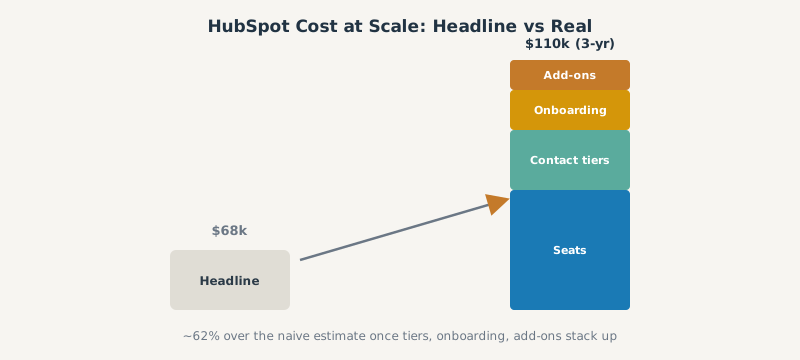
The gap between expectation and reality is the whole story:
- A 10-person team on Marketing Pro plus Sales Pro: about $110,000 over 3 years versus a naive expectation near $68,000, a 62% overrun.
- A real 5-person team on Professional with 10,000 contacts: $1,200 to $1,800 per month versus the $890 headline.
Model your own TCO by adding four things, not one: core seats, the marketing-contact tier your database will reach, year-one onboarding, and the add-ons your stack actually needs. That total, projected across your growth curve, is your real cost at scale, and it is what determines whether you should scale on HubSpot or migrate.
How to Control HubSpot Costs at Scale
You have more levers than HubSpot’s pricing page suggests:
- Negotiate. HubSpot pricing is negotiable, especially at Professional and Enterprise and at renewal. Mid-market teams routinely secure 30% or more off list.
- Practice contact-tier hygiene. Mark non-engaged and internal records as non-marketing contacts so you are not billed for a database you do not actively market to. This alone prevents most tier auto-upgrades.
- Right-size seats. Use HubSpot’s cheaper or view-only seats for people who do not need full core access.
- Watch the renewal. Renewal increases are a top complaint, often far larger than the small bumps customers expect, so review the contract and negotiate before it auto-renews.
What Are HubSpot Credits, and Choosing a Plan
A newer wrinkle in HubSpot pricing is HubSpot Credits, a usage-based currency that pays for certain AI and premium actions on top of your subscription. They matter when choosing a plan because they are another variable cost as you scale, alongside seats and contacts. When you compare HubSpot CRM pricing per user across tiers, factor credits in with everything else: starting on Hub Starter, the jump to Professional for automation and custom reporting, enterprise onboarding, lead scoring, and add-ons like removing HubSpot branding. A HubSpot Solutions Partner can model the full picture so you pick tools that scale with you rather than over-buying. The goal is to automate workflows and grow without the billing creeping past what the growth justifies.
Is HubSpot Worth the Cost at Scale?
For most companies under 500 employees, yes. A 25-person team runs about $20,400 per year on HubSpot Professional versus roughly $49,500 on Salesforce Enterprise, so the value holds well into mid-market. The danger is not the price, it is the surprise. Teams that model the full bill and manage contacts and seats get strong ROI; teams that trust the headline get burned. For the naming context behind these plans, see HubSpot Growth Suite is now the Customer Platform.
Frequently Asked Questions
How much does HubSpot cost at scale? Far more than the headline. A 10-person team’s 3-year TCO is about $110,000, roughly 62% over the naive estimate, once seats, contact tiers, onboarding, and add-ons are included.
Why did my HubSpot bill jump? Almost always the marketing-contact tier. Crossing a 1,000-contact increment auto-upgrades your tier, and it never auto-downgrades. Contact-tier hygiene prevents it.
Are there hidden HubSpot fees? Yes: mandatory onboarding ($1,500 to $7,000), add-ons like a dedicated IP and advanced reporting, and SMS overages, none of which appear on the headline price.
Can you negotiate HubSpot pricing? Yes. Professional and Enterprise pricing is negotiable, and many mid-market customers get 30% or more off list, especially at renewal.
Which HubSpot plan is right for my size? Starter for small teams with simple needs, Professional for growing mid-market teams that need automation and reporting, and Enterprise for advanced controls, custom objects, and large databases.
SWOTBee builds your HubSpot total cost of ownership model before you sign or renew, and tunes seats and contact tiers so you stop overpaying. The bill should never surprise you.
Get your 1-page renewal leakage estimate →
No call needed. Prefer to talk it through first? Book a free 30-minute discovery call →