This article is part of our complete guide to customer retention.
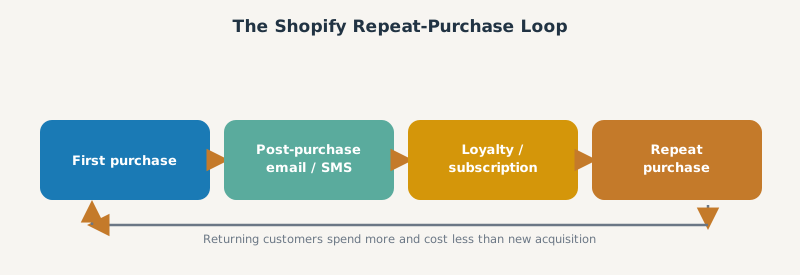
Shopify customer retention strategies are the tactics a Shopify store uses to turn one-time buyers into repeat customers: loyalty programs, subscriptions, post-purchase email and SMS, and a great customer experience. The goal is to lift your repeat customer rate, because returning customers spend more and cost less than acquiring new ones. For Shopify store owners, retention is the most reliable path to profit: acquiring a customer through ads keeps getting more expensive, while a loyal customer base compounds. This guide covers how to measure Shopify retention, what a good repeat purchase rate looks like, and the strategies and apps that work.
Why Customer Retention Matters for Shopify Stores
Most Shopify stores over-invest in acquisition and under-invest in retention, which is why many fail despite heavy ad spend: the unit economics only work if customers come back. A returning customer has a higher customer lifetime value, a lower cost to serve, and is more likely to refer others. Investing in customer retention can boost profits significantly, because even a small lift in repeat purchase rate flows almost entirely to the bottom line. For Shopify merchants, retention is not a nice-to-have; it is the difference between a store that scales and one that stalls.
How to Measure Customer Retention on Shopify
The key Shopify retention metrics:
| Metric | What it measures |
|---|---|
| Repeat customer rate | Share of customers who buy again |
| Customer retention rate | Share of customers kept over a period |
| Purchase frequency | How often customers buy |
| Customer lifetime value | Total value of a retained customer |
| Customer churn | Customers who stop buying |
A good repeat customer rate for Shopify stores is typically 20% to 30%, though it varies by category (consumables run higher, considered purchases lower). Shopify analytics gives you the raw data; the goal is to grow the repeat purchase rate and customer lifetime value over time.
Shopify Customer Retention Strategies That Work
The most effective Shopify customer retention strategies turn a first purchase into a relationship:
1. Launch a Loyalty Program
A customer loyalty program rewards repeat purchases with points, perks, or tiers, giving customers a reason to come back. Loyalty programs are one of the highest-impact retention tactics for Shopify brands.
2. Add Subscriptions
For consumable or replenishable products, a subscription converts a one-time buyer into recurring revenue and dramatically lifts retention. Subscriptions are the closest ecommerce equivalent of SaaS recurring revenue.
3. Win the Post-Purchase Experience
Retention is decided after the sale: order updates, helpful customer service, and a smooth returns experience build the trust that drives repeat business. A customer who feels looked after comes back.
4. Use Email and SMS Lifecycle Marketing
Post-purchase flows, replenishment reminders, and win-back campaigns over email and SMS keep your store top of mind and bring customers back at the right moment.
5. Segment and Personalize
Use customer data and purchase behavior to segment customers and personalize offers, so the right product reaches the right customer. Personalization lifts both conversion and retention.
6. Gather and Act on Customer Reviews and Feedback
Customer reviews build trust with new buyers and surface the issues that cause churn. Acting on feedback shows customers the brand listens, which deepens loyalty.
The Best Shopify Apps for Customer Retention
Shopify’s strength is its app ecosystem. The categories of retention apps worth having:
- Loyalty and rewards apps to run points and tiers.
- Subscription apps to add recurring orders.
- Email and SMS marketing apps for lifecycle flows.
- Reviews apps to capture social proof and feedback.
- Analytics apps to track repeat purchase rate and cohorts.
Choose apps that integrate cleanly so customer data is not siloed, the same principle behind good customer retention software in any channel.
Key Retention Metrics Every Shopify Store Should Track
Proven strategies for shopify stores start with measurement. Beyond the repeat customer rate, track these key retention metrics to manage customer retention on Shopify:
- Customer retention rate and churn. What share of existing customers come back versus stop buying.
- Customer lifetime value. The total customer value of a returning customer, the number that justifies retention spend.
- Purchase frequency and time between orders. Signals for replenishment timing and win-back.
- Customer cohort retention. Group customers by first-purchase month to see which acquisition sources produce loyal customers versus one-time buyers.
Watching these over time tells you whether your retention programs are building a loyal customer base or just discounting to the same buyers. A high retention rate in one customer cohort and a low one in another points you straight to what to fix.
Reducing Customer Churn on Shopify
Acquiring a new customer is far more expensive than keeping an existing customer, so reducing churn is where the margin is. The biggest drivers of ecommerce retention are a better customer experience and excellent customer service: fast responses to customer inquiries, easy returns, and proactive order updates. Segment customers into customer groups by behavior and value, then tailor retention strategies for Shopify stores to each, win-back flows for lapsed buyers, VIP perks for your best customers, replenishment reminders for consumables. Managing customer relationships at this level is what turns a one-time buyer into a lasting customer and lifts the whole store’s retention.
Connecting Shopify Retention to Your CRM
The most sophisticated Shopify brands do not keep retention data trapped in the store. Connecting Shopify to a CRM gives you one view of the customer across orders, email, and support, so retention is driven by the full picture, not just purchase history. This is the same CRM for customer retention discipline that powers B2B retention, applied to ecommerce, and it is how a growing Shopify brand scales retention beyond apps.
Frequently Asked Questions
What are effective Shopify customer retention strategies? Loyalty programs, subscriptions for replenishable products, a strong post-purchase experience, email and SMS lifecycle marketing, personalization, and acting on customer reviews and feedback.
How do you measure customer retention on Shopify? Track repeat customer rate, customer retention rate, purchase frequency, and customer lifetime value. Shopify analytics provides the data; the goal is to grow repeat purchases over time.
What is a good customer retention rate for Shopify stores? A repeat customer rate of roughly 20% to 30% is healthy, though it varies by category, with consumables higher and considered purchases lower.
What are the best Shopify apps for customer retention? Loyalty and rewards apps, subscription apps, email and SMS marketing apps, reviews apps, and analytics apps, ideally ones that integrate so customer data stays unified.
How do loyalty programs improve Shopify customer retention? They reward repeat purchases with points, perks, or tiers, giving customers a concrete reason to return and increasing purchase frequency and lifetime value.
Why do some Shopify stores fail despite heavy ad spend? Because they rely on acquisition without retention. Rising ad costs make one-time buyers unprofitable; only a strong repeat purchase rate makes the unit economics work.
SWOTBee helps Shopify merchants build retention engines, loyalty, subscriptions, lifecycle marketing, and CRM integration, so repeat customers, not just ad spend, drive growth. We connect your store to the full customer picture.
Get your 1-page renewal leakage estimate →
No call needed. Prefer to talk it through first? Book a free 30-minute discovery call →