This article is part of our complete guide to B2B customer retention.
Customer retention software is any tool that helps a business keep its existing customers by tracking customer behavior, surfacing churn risk, and automating the actions that improve retention. It spans CRMs, customer success platforms, feedback tools, and analytics software, all aimed at the same goal: reduce customer churn and build lasting customer relationships. This guide explains what customer retention software is, the types of tools, the features that matter, how it compares to a CRM, and how to choose the right customer retention tool for your business.
For the strategy these tools serve, start with our B2B customer retention guide.
What Is Customer Retention Software?
Customer retention software is any tool that helps businesses improve customer retention by giving them a clearer view of their customers and the means to act on it. Where customer acquisition tools focus on winning new customers, customer retention software focuses on keeping the ones you have, tracking customer health, flagging at-risk accounts, gathering customer feedback, and automating the outreach that keeps customers engaged.
The best customer retention software does three things well: it captures customer data and behavior, it turns that into insight (who is at risk and why), and it helps you act before churn happens.
Types of Customer Retention Software
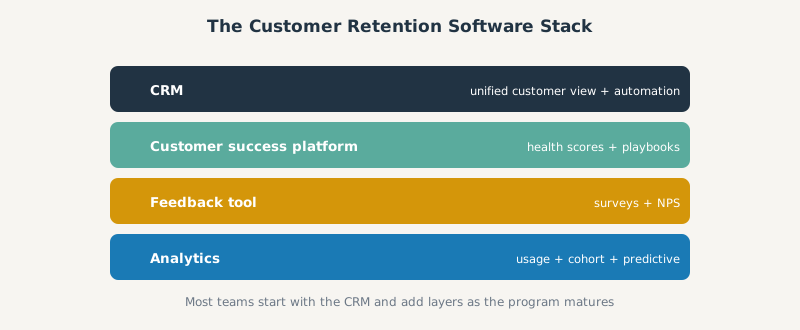
There is no single category. Customer retention tools fall into several types, and most teams combine a few:
| Type | What it does | Example use |
|---|---|---|
| CRM | One view of the customer, automation, renewals | The retention backbone |
| Customer success platform | Health scores, playbooks, account management | Proactive churn prevention |
| Customer feedback tool | Surveys, NPS, sentiment | Hear and act on customer needs |
| Analytics software | Usage and cohort analysis | Spot disengagement early |
| Loyalty and automation tools | Rewards, lifecycle messaging | Drive repeat purchase and engagement |
A customer retention management software stack usually starts with the CRM and adds the others as the program matures.
Features to Look For in Customer Retention Software
When choosing the right customer retention software, prioritize the features that actually move retention:
- Unified customer view. A single view of your customer across usage, support, and billing.
- Health and risk scoring. So you know which accounts to save first.
- Behavior and usage tracking. To catch silent disengagement before it becomes churn.
- Automation tools. Triggered onboarding, check-ins, and renewal reminders.
- Customer feedback capture. Surveys and NPS that feed the retention motion.
- Retention analytics. Dashboards that track the customer retention rate and cohorts over time.
- Integrations. It must connect to the rest of your stack so data is not siloed.
The right tool helps businesses reduce customer churn by making these capabilities work together rather than in isolation.
Predictive Analytics and Early-Warning Signals
The most valuable customer retention software does not just report what happened; it predicts what will. Predictive analytics uses customer behavior, usage trends, and engagement to forecast which accounts are likely to churn, so customer success can intervene early. Early-warning-signal platforms turn declining usage (the leading indicator of churn) into an alert while there is still time to act. This is the difference between a tool that helps you understand churn and one that helps you prevent it, the proactive approach we detail in silent churn detection and cohort retention analysis.
How Customer Retention Software Helps You Reduce Churn
The point of customer retention software is to boost customer retention by turning scattered signals into action. A good tool tracks customer interactions across the customer journey, scores customer health, and triggers automation tools to help businesses respond before a customer leaves. Where a spreadsheet shows you churn after the fact, powerful customer retention software helps businesses reduce customer churn while there is still time to act.
The best customer retention software tools share a few traits: they unify customer data into one customer relationship management platform, they use an analytics tool to surface customer insights and retention metrics, and they enhance customer engagement with personalized, timely outreach. Tools like dedicated customer success software (Custify is a customer success platform designed to help reduce churn, for example) sit alongside the CRM and customer service software to cover the full post-sale relationship. The many customer retention tools on the market differ in focus, but using customer retention software well comes down to the same loop: track customer behavior, predict risk, and act to improve user adoption and retention. Done right, customer retention software to boost loyalty pays for itself by protecting recurring revenue.
CRM vs Customer Retention Software: What Is the Difference?
This is a common question, and the answer is that the lines overlap. A CRM is a broad system of record for all customer relationships, including sales and retention. Dedicated customer retention software (such as a customer success platform) is purpose-built for the post-sale job of keeping customers. For many B2B teams, a strong CRM like HubSpot, configured with health scores and automation, is the customer retention software, and they add specialized tools only when they outgrow it. We cover that approach in CRM for customer retention.
How to Choose the Right Customer Retention Tool
Choosing the right customer retention software comes down to fit, not feature count:
- Start with your retention gaps. Are you losing customers to weak onboarding, silent churn, or no renewal process? Buy for the gap.
- Check it integrates. A tool that does not connect to your CRM creates another silo.
- Favor the unified view. One source of customer truth beats five disconnected tools.
- Match it to your stage. Smaller teams often need only a well-configured CRM; larger ones add a customer success platform.
- Measure the result. Whatever you choose, confirm it moves the customer retention rate and reduces churn.
Is there free customer retention software? Yes, many CRMs (including HubSpot) offer a free tier that covers the basics, so you can start improving retention before investing in a dedicated platform.
Frequently Asked Questions
What is customer retention software? Any tool that helps a business keep its existing customers by tracking customer behavior, surfacing churn risk, and automating the actions that improve retention. It spans CRMs, customer success platforms, feedback tools, and analytics.
What are the best customer retention tools? The best stack usually starts with a CRM for the unified customer view, plus a customer success platform for health scoring, a feedback tool for NPS, and analytics for cohort and usage insight.
How does customer retention software reduce churn? It captures customer behavior, predicts which accounts are at risk, and automates timely interventions, so teams act before disengaged customers cancel rather than after.
What is the difference between a CRM and customer retention software? A CRM is a broad system of record for all customer relationships; customer retention software is purpose-built for keeping customers post-sale. A well-configured CRM often serves as the retention software for B2B teams.
Is there free customer retention software? Yes. Several CRMs, including HubSpot, offer free tiers that cover core retention features, so you can start before buying a dedicated platform.
How much does customer retention software cost? It ranges from free CRM tiers to enterprise customer success platforms costing thousands per month. Match the spend to your retention gap and team size rather than buying the most expensive option.
SWOTBee configures customer retention software on HubSpot, health scores, usage tracking, automation, and renewal pipelines, so you reduce churn without a sprawling tool stack. One system, built for retention.
Get your 1-page renewal leakage estimate →
No call needed. Prefer to talk it through first? Book a free 30-minute discovery call →