This article is part of our 365-day renewal strategy guide.
Whitespace analysis maps your product portfolio against a customer’s departments and use cases to uncover untapped cross-sell and upsell opportunities, the “white space” where they could buy more but haven’t. It turns vague expansion goals into a concrete, account-by-account pipeline, and the renewal is the perfect moment to act on it. For key accounts, whitespace analysis is how you find hidden revenue inside your existing customer base.
You already have the accounts; whitespace analysis shows you the unsold opportunity inside them. This guide explains what it is, how it works, and how to build an expansion pipeline from it.
What Is Whitespace Analysis in Sales?
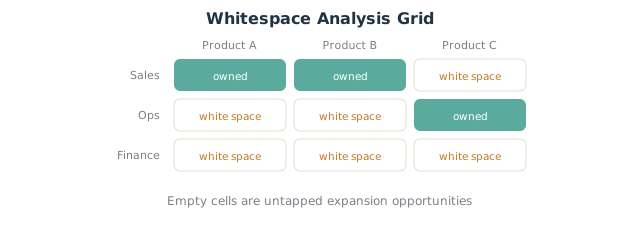
Whitespace analysis (or white space analysis) is the practice of mapping what a customer currently owns against everything they could own, then identifying the gaps. The “white space” is the untapped area: products they don’t use yet, departments not yet covered, or seats not yet sold.
It is a core account-planning technique for existing accounts. Where new-business prospecting hunts for new logos, whitespace prospecting hunts for new revenue inside customers you already have, which is cheaper and higher-margin.
How Whitespace Analysis Works
The method is a simple grid, often built in your CRM or Salesforce:
- Rows: the customer’s departments, teams, or business units.
- Columns: your products, modules, and use cases.
- Cells: filled (owned) or empty (white space opportunity).
The empty cells are your map of growth opportunities. White space mapping turns an account into a visual of where you have penetrated and where you have not, so the sales team can prioritize the highest-value gaps.
Benefits of Whitespace Analysis
- Uncovers hidden sales. It surfaces revenue opportunities that account teams miss when focused only on the renewal number.
- Focuses effort. It shows which white space accounts have the most untapped potential, so you prioritize.
- Strengthens account plans. It makes the strategic account plan concrete: specific products for specific teams.
- Fuels the expansion pipeline. Each gap becomes a tracked land-and-expand opportunity.
How to Identify White Space Opportunities
To identify white space in your accounts:
- Inventory what they own. Pull current products, modules, and seats per account from your CRM.
- Map the buying center. Identify the departments and stakeholders not yet using you, supported by multi-threading.
- Match products to needs. Overlay your portfolio against each department’s pain points and use cases.
- Score the gaps. Prioritize by deal size, fit, and buying signals, using product-qualified signals where available.
- Tie it to the renewal. Bring the top opportunities into the renewal conversation so expansion is one decision.
Turning Whitespace Into an Expansion Pipeline
Whitespace analysis only pays off when the gaps become pipeline. Convert white space opportunities into tracked expansion deals, assign owners, and review them at every QBR and renewal. Distinguish cross-sell from upsell as you go, and let customer success surface qualified expansion leads. Over time, this disciplined approach to existing accounts unlocks hidden revenue that new-business prospecting alone would never reach, and it lifts net revenue retention.
Whitespace Analysis and Revenue Growth
Whitespace analysis is fundamentally a revenue growth tool: it turns your existing customer base into a source of new revenue without the cost of chasing new logos. Because it focuses on current customers and the accounts you already serve, it is far more efficient than prospecting new markets, the relationships, data, and trust already exist.
To make it a repeatable sales practice rather than a one-off exercise:
- Build a whitespace dashboard. A simple visualization of owned vs unsold across accounts gives the sales organization a live view of opportunities to grow.
- Align sales and marketing. Use sales data and customer usage to prioritize, and have marketing support the highest-value cross-sell and up-sell plays.
- Map to customer needs. The best whitespace opportunities solve a real customer need in a new line of business or service line, not just “another product to sell.”
- Tie it to the sales process. Each whitespace opportunity should enter the pipeline with an owner and a path to close, the same as new business.
- Measure ROI. Track revenue from whitespace plays so you can prove this approach increases sales and justify the account-management time it takes.
Done consistently, whitespace analysis becomes a core sales strategy that helps account management unlock hidden revenue and turn every renewal into a checkpoint for new opportunities.
Frequently Asked Questions
What is whitespace analysis in sales? Mapping what a customer owns against what they could own to find untapped cross-sell and upsell opportunities (the “white space”) in existing accounts.
How does whitespace analysis work? Build a grid of the customer’s departments against your products; empty cells are white space opportunities to prioritize and pursue.
What are the benefits of whitespace analysis? It uncovers hidden sales, focuses effort on the biggest gaps, strengthens account plans, and feeds the expansion pipeline.
How do you identify white space opportunities? Inventory what each account owns, map the departments not yet covered, match products to needs, score the gaps, and tie the top ones to the renewal.
Why do whitespace analysis at renewal? The renewal is when the customer is deciding their next 12 months, so expansion opportunities fold naturally into one conversation.
Whitespace analysis is the expansion-mapping discipline of the 365-day renewal strategy.
Your next big deal is probably hiding inside an account you already have. SWOTBee builds whitespace and expansion programs for mid-market companies across Energy, Manufacturing, and SaaS.
Get your 1-page renewal leakage estimate →
No call needed. Prefer to talk it through first? Book a free 30-minute discovery call →