This article is part of our 365-day renewal strategy guide.
SaaS contract negotiation at renewal is won by leading with proven value and holding firm on terms, not by reflexively discounting when procurement applies pressure. When the C-suite and procurement enter at renewal time, you face budget-freeze bluffs, competitor comparisons, and feature demands. A disciplined negotiation strategy defends both the renewal and your margin. (This is the vendor’s side of the table: how to negotiate and protect your renewals.)
Procurement’s job is to extract concessions; yours is to anchor on value. This guide covers the key terms to hold, the negotiation strategies that work, and the mistakes to avoid.
Why Renewal Negotiation Is Different
A renewal negotiation is not a fresh sale. The customer is already using your product, which changes the dynamics:
- You have leverage you may not use: switching costs are real, and the customer knows it.
- Procurement has a playbook: budget freezes, last-minute discount demands, and competitor price quotes are standard tactics, not always genuine.
- Value is your strongest card: if you have proven realized value, price becomes a smaller part of the conversation.
The teams that negotiate well prepare months ahead through QBRs and multi-threading, so the renewal date is not the first time they meet the economic buyer.
Key Terms to Hold (and Where to Flex)
In any SaaS agreement renewal, know your priorities before the conversation:
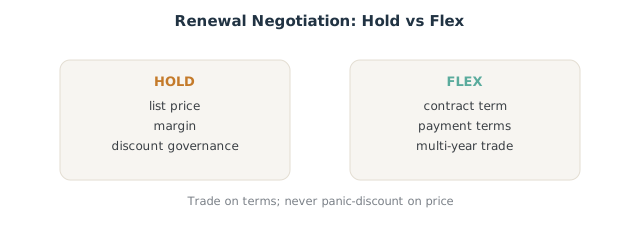
- Price and uplift: hold a standard renewal uplift; flex on multi-year commitment, not list price.
- Contract term: trade better pricing for a longer contract length.
- Auto-renewal clauses and renewal date: clarify notice periods so the renewal is not disputed.
- Payment terms: annual upfront is worth a small concession; avoid eroding cash flow.
- Discounts: govern them. A discount given without a trade (longer term, case study, expansion) trains the customer to expect it next time.
Flex on terms that cost you little and the customer values; hold on price and anything that erodes margin or sets a bad precedent. The ability to negotiate from this position, knowing your priorities before signing a SaaS renewal, is what separates a confident negotiator from one who concedes under pressure.
Handling Procurement Tactics
Common pressure tactics and the proper response:
- The budget-freeze bluff: “We have no budget.” Response: reframe around the cost of switching and the value at risk, and offer payment-term flexibility, not a price cut.
- The competitor quote: “Vendor X is cheaper.” Response: do not panic-discount. Reinforce your unique value proposition and the cost of migration.
- Feature blackmail: “We’ll only renew if you build X.” Response: tie commitments to the roadmap and the renewal, never free custom work without reciprocal commitment.
- The last-minute squeeze: a discount demanded days before renewal. Response: this is why you start early; a renewal worked over 12 months is not held hostage in the final week.
Key SaaS Contract Terms Procurement Will Raise
Even from the vendor’s side, you need fluency in the contract terms procurement teams negotiate, because they will raise them at renewal. The key terms in a SaaS agreement include:
- Price and terms: the headline, but only one of many levers. Trade on contract term and payment terms before list price.
- Service levels (SLA): uptime guarantees, response times, and performance metrics. Hold realistic service level commitments; over-promising uptime creates breach risk.
- Auto-renewal and termination: auto-renewal clauses, notice periods, and termination rights. Clear renewal terms prevent disputes.
- Liability and indemnification: the limitation of liability clause and liability cap. These are standard in commercial contracts; know your defensible position.
- Data protection and security: GDPR and data protection laws, data security, data ownership, and certifications like SOC 2. Enterprise procurement will scrutinize these.
- Audit and additional fees: audit rights and any additional fees. Be transparent to preserve the vendor relationship.
You do not have to concede on every clause. Knowing which terms and conditions matter to the customer (and which are boilerplate) lets you trade favorable terms where it costs you little, and hold firm where it protects the business. Strong contract renewal management means tracking these terms across the contract lifecycle, not renegotiating from scratch each year.
Negotiation Strategies That Work
- Lead with value, then price. Open with the outcomes delivered (ROI, business impact), so price is anchored against value.
- Multi-thread. Negotiate with the economic buyer, not just procurement, using your stakeholder map.
- Anchor with tiers. Use good-better-best pricing to make the target package the easy middle choice.
- Trade, never give. Every concession earns something: a longer term, an expansion, a reference.
- Quantify switching cost. Make the true cost of leaving (migration, retraining, risk) explicit and concrete.
Mistakes to Avoid
- Panic-discounting at the first sign of pressure, which sets a precedent and erodes margin.
- Negotiating only with procurement, who are incentivized to push price down.
- Waiting until the renewal date to engage, removing all your leverage.
- Free feature commitments with no reciprocal commitment from the customer.
Frequently Asked Questions
How do you negotiate a SaaS renewal? Lead with proven value, hold firm on price while flexing on terms like contract length, multi-thread to the economic buyer, and trade every concession for something in return.
What are the key terms to negotiate at renewal? Price and uplift, contract term, auto-renewal and notice clauses, payment terms, and governed discounts.
How do you respond to a competitor’s lower price? Don’t panic-discount. Reinforce your unique value and quantify the cost of switching, then defend margin with tiered options.
What mistakes should you avoid in renewal negotiation? Panic-discounting, negotiating only with procurement, engaging too late, and giving free feature work without reciprocal commitment.
Why start renewal negotiation early? Engaging months ahead through QBRs and multi-threading preserves leverage, so the renewal is not held hostage in the final week.
Negotiation is the final act of the 365-day renewal strategy; see also how to build renewal quotes and price increases.
Discounting is a tactic of last resort, not a renewal strategy. SWOTBee builds renewal negotiation playbooks for mid-market companies across Energy, Manufacturing, and SaaS.
Get your 1-page renewal leakage estimate →
No call needed. Prefer to talk it through first? Book a free 30-minute discovery call →