This article is part of our complete guide to quote to cash, which is itself part of our complete guide to CRM and ERP integration.
Quote-to-cash software is any tool that automates part of the quote-to-cash process: configuring and pricing a quote, managing the contract, creating the order, billing, collecting payment, and recognizing revenue. Some vendors sell one piece of that (CPQ, or e-signature, or billing). Others sell a full suite that covers all of it. Neither is automatically the right answer, the right choice depends on how complex your quotes are, what CRM you already run on, and whether you bill once or on a recurring basis.
This guide covers the categories of quote-to-cash software, what each one actually does, how they connect to your CRM and ERP, and how to decide between a suite and a set of best-of-breed tools.
Once you have selected the tools, the HubSpot quote-to-cash implementation guide helps map accepted agreements to billing and accounting. This guide retains software-selection ownership.
The Categories of Quote-to-Cash Software
Quote-to-cash is not one product category, it is a chain of five, and most companies end up combining tools from more than one:
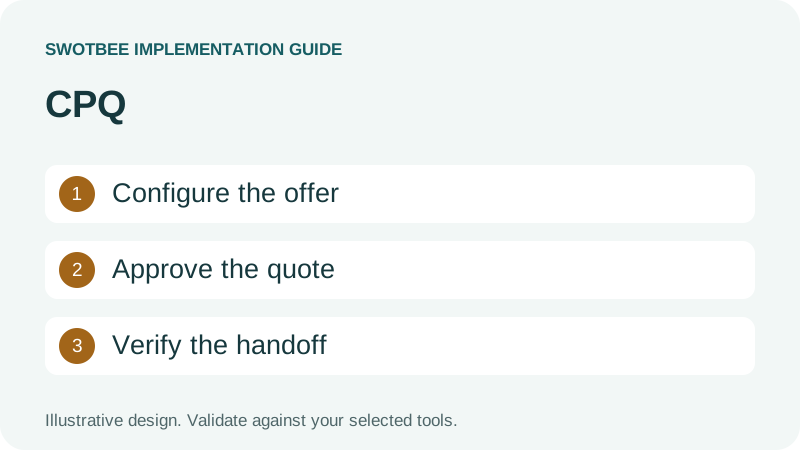
CPQ (configure, price, quote). Builds the quote itself: which products, at what price, with what discount approvals. This is the category most people mean when they say “quote to cash software” in isolation. Examples: Salesforce CPQ, DealHub, PandaDoc, HubSpot Revenue Hub CPQ.
CLM and e-signature. Manages the contract from draft through negotiation to signature. Once a quote is approved, this is where it becomes a binding agreement. Examples: DocuSign CLM, Ironclad, PandaDoc, HubSpot’s native e-signature for simple contracts.
Order management. Turns the signed contract into a fulfillable order, the record that tells operations and finance what was actually sold. In smaller companies this is often just a deal stage change in the CRM rather than a separate tool.
Billing and revenue recognition. Invoices the customer, collects payment, and recognizes revenue on the right schedule, especially important for subscription and usage-based pricing where revenue doesn’t match cash collection month to month. Examples: Chargebee, Zuora, Maxio, Stripe Billing, or ERP-native billing modules.
The CRM. Not usually counted as “quote to cash software” on its own, but it is the system every other tool in the chain reads from and writes back to. The CRM stays the system of record for the customer and the deal.
Suite vs. Best-of-Breed: How to Choose
A full suite (Salesforce Revenue Cloud, for example) bundles CPQ, CLM, billing, and revenue recognition under one vendor with one data model. The advantage is fewer integration points and one system to administer. The cost is a bigger implementation, a bigger price tag, and less flexibility to swap out one piece later.
Best-of-breed means picking a specialist tool for each stage, a CPQ tool, an e-signature tool, a billing platform, and integrating them through the CRM. This is where most mid-market companies land, because it lets you buy only the complexity you actually need. A company selling a handful of simple SKUs on flat annual contracts does not need the same CPQ depth as one selling hundreds of configurable products with tiered discount approvals.
Use this as a rough guide:
| Situation | Fits better |
|---|---|
| Simple pricing, low deal volume, one CRM | Best-of-breed, often just native CRM quoting plus e-signature |
| Complex configurable pricing, multiple approval tiers | Dedicated CPQ tool |
| Subscription billing with usage components | Dedicated billing platform (Chargebee, Zuora, Maxio) integrated to the CRM |
| High deal volume across multiple business units | Full suite, the integration overhead of best-of-breed starts to outweigh the flexibility |
Where HubSpot Fits
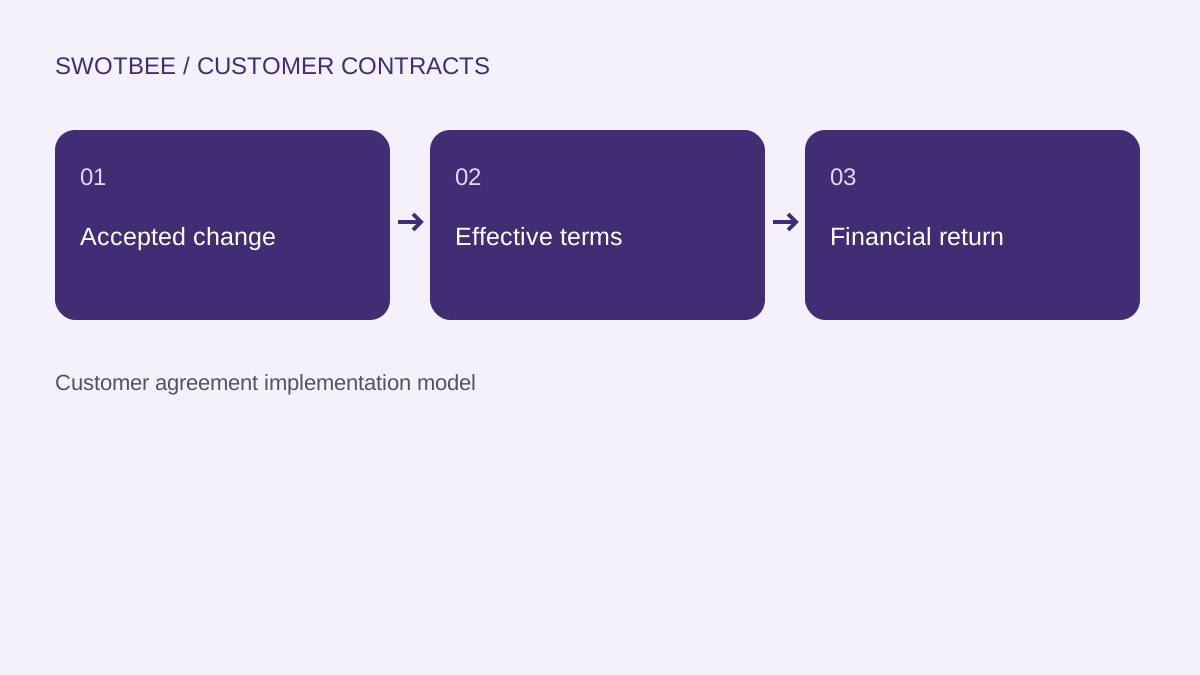
Evaluate Revenue Hub’s connected CPQ, billing and payments before buying additional tools. The connected process is a beta with Revenue Hub Professional or Enterprise and seat requirements. It can use accepted quotes to create Contracts, billing schedules and invoices. Confirm eligibility and test your invoice schedule before enabling it.
- A specialist CPQ tool when a tested product-configuration requirement exceeds the native setup.
- A billing or accounting platform when its required capabilities exceed the selected native billing path. See our comparison of HubSpot billing integrations for how Revenue Hub (formerly Commerce Hub), Stripe, Chargebee, Maxio, Zuora, and Recurly stack up.
- An ERP integration for order fulfillment and financial reporting once the deal closes. See our guide to CRM and ERP integration.
Where Quote-to-Cash Software Ends and Renewals Begin
Renewals may already be supported by the chosen revenue or billing platform. In HubSpot, distinguish Contract-based renewals from a deal-workflow implementation. Define notice deadlines, amendments, ownership and renewal forecasting before choosing extra software; the first invoice is not the end of the agreement lifecycle.
If you’re evaluating quote-to-cash software for a subscription or contract-based business, it’s worth deciding upfront how renewals will flow out the other end. Our guide to building a renewal pipeline in HubSpot covers how to structure that handoff so a closed-won deal automatically becomes a tracked renewal instead of falling off a spreadsheet.
Related Reading
- Quote to Cash: The Complete Process, Steps, and How to Automate It
- Quote to Cash vs. CPQ: What’s the Difference?
- HubSpot Billing Integrations Compared
- Complete Guide to Building a Renewal Pipeline in HubSpot
Frequently Asked Questions
What is quote to cash software? Software that automates some or all of the quote-to-cash process: configuring and pricing a quote (CPQ), managing the contract and signature (CLM/e-signature), creating the order, billing, collecting payment, and recognizing revenue. It ranges from single-purpose tools to full suites.
Is quote to cash software the same as CPQ software? No. CPQ (configure, price, quote) is one stage of quote to cash. Quote-to-cash software is the broader category, it can include CPQ plus CLM, billing, and revenue recognition, or it can be several separate tools stitched together.
Do I need a full quote-to-cash suite, or can I use separate tools? Most mid-market companies start with separate best-of-breed tools (CPQ, e-signature, billing) integrated through the CRM, because a full suite is expensive and often over-built for their deal complexity. Full suites make sense once deal volume, approval complexity, or subscription billing complexity outgrow what point tools and integrations can handle cleanly.
Can HubSpot handle quote to cash on its own? Revenue Hub combines CPQ, commercial Contracts, invoicing and payments. Some connected billing behavior requires beta enrollment. Evaluate legal-document governance and accounting requirements separately rather than assuming either native HubSpot or an external suite covers everything.
What is the best quote-to-cash software for a mid-market company? Choose against the actual quoting, document, billing and accounting requirements. HubSpot teams should evaluate Revenue Hub alongside specialist tools, rather than assuming external CPQ and recurring billing are always required.
How much does quote to cash software cost? Point tools (e-signature, basic CPQ) can start under $50/user/month. Dedicated CPQ platforms like DealHub or Conga typically run into the hundreds of dollars per user per month for mid-market deployments. Full suites like Salesforce Revenue Cloud are priced per opportunity or per user and usually require a sales conversation, not published list pricing.
Does quote to cash software replace my ERP? No. Quote-to-cash software manages the front half of the process, quoting, contracts, and sometimes billing, but it still needs to hand off order and revenue data to the ERP for fulfillment, financial reporting, and revenue recognition at scale. The two systems work together, not in place of each other.