This article is part of our complete guide to quote to cash, which is itself part of our complete guide to CRM and ERP integration.
CPQ (configure, price, quote) and quote to cash are not the same thing. CPQ is one stage inside quote to cash, the part that produces an accurate quote. Quote to cash is the entire process, from that quote through the signed contract, the order, the invoice, the payment, and revenue recognition. Confusing the two leads companies to buy a CPQ tool expecting it to solve billing or contract problems it was never built to touch.
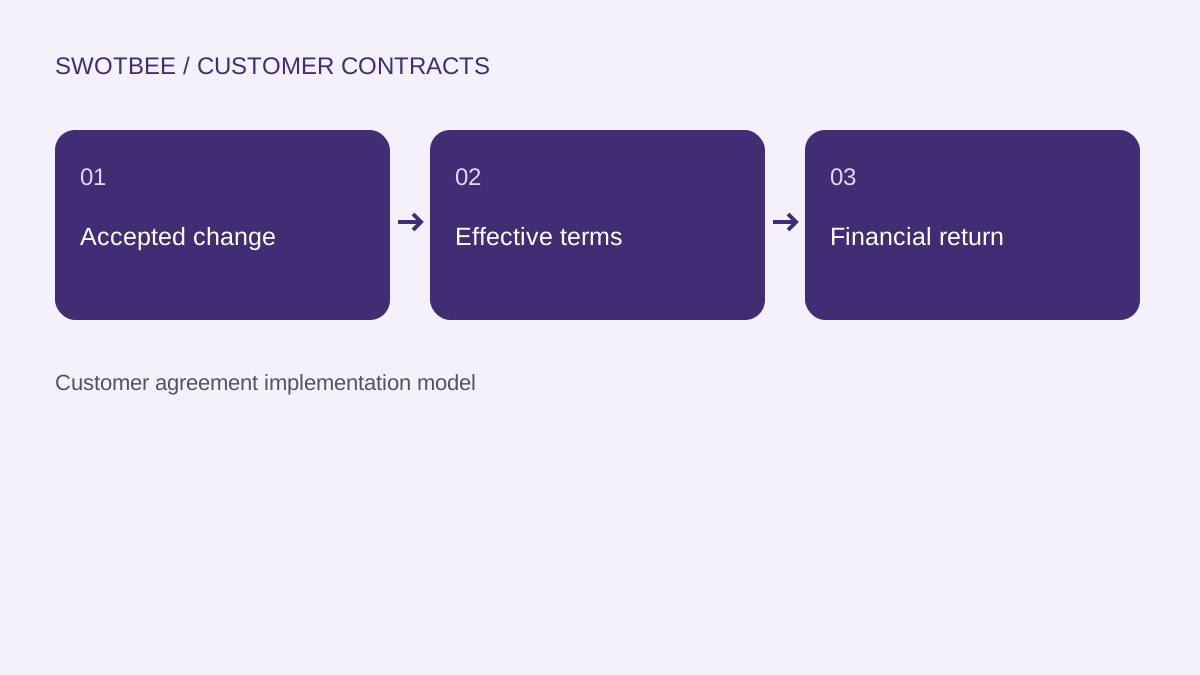
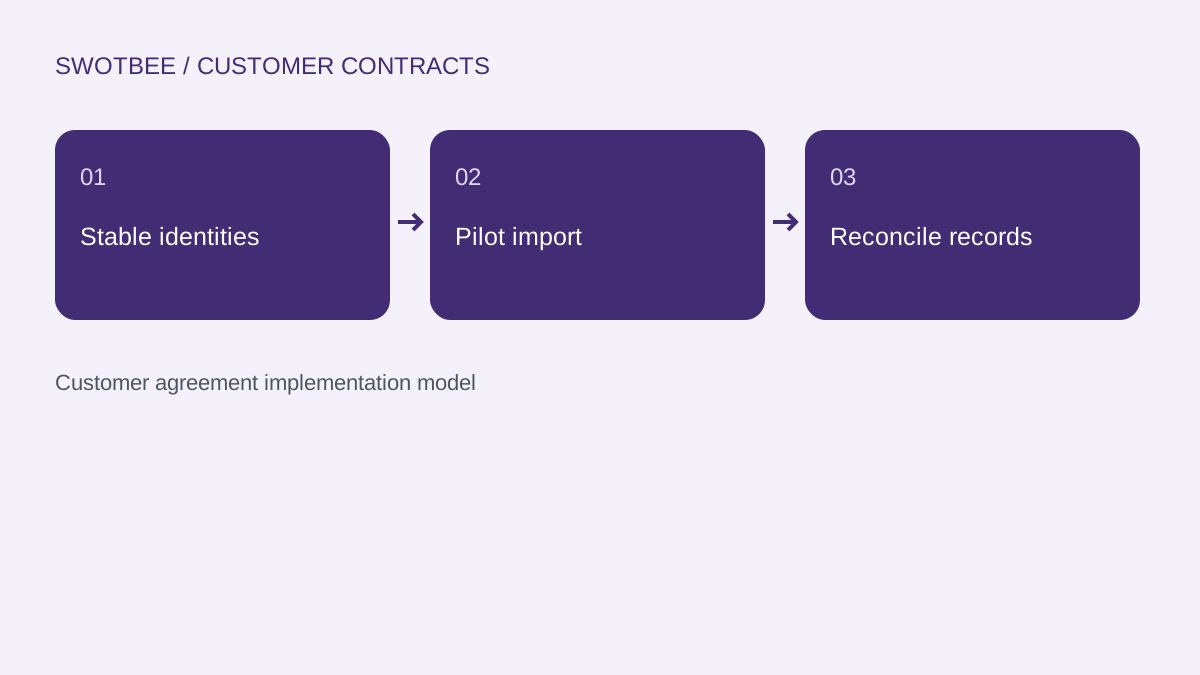
For implementation after choosing the quoting path, use our HubSpot quote-to-cash guide, which covers customer agreements, billing ownership and accounting reconciliation.
For a HubSpot-specific quoting implementation, use the HubSpot CPQ product, pricing and approval guide.
CPQ: One Stage of a Longer Process
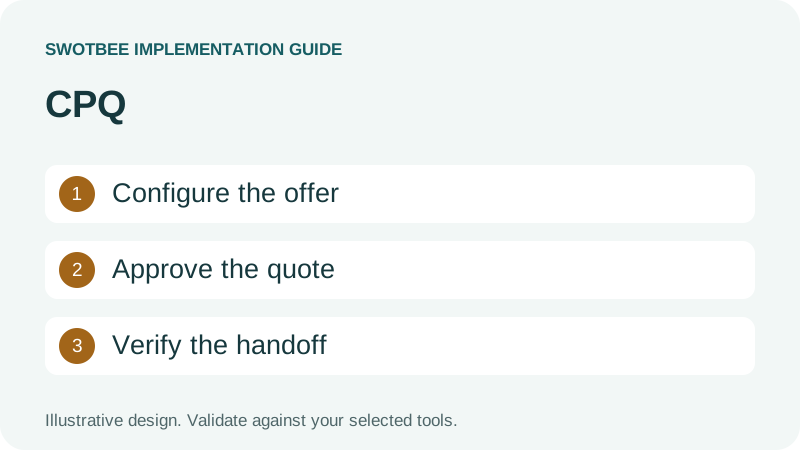
CPQ software answers one question: what is the correct, approved price for this specific configuration of products, for this specific customer? It handles:
- Product configuration rules (which options are compatible, which are mutually exclusive)
- Pricing logic (volume discounts, tiered pricing, bundle pricing)
- Approval workflows (a rep offering more than a threshold discount routes to a manager)
- Quote document generation
That’s the whole job. A CPQ tool does not manage what happens to the contract after the quote is accepted, does not bill the customer, and does not recognize revenue.
Quote to Cash: The Whole Chain
Quote to cash covers everything from the moment a rep starts a quote to the moment the business has collected and recognized the cash:
- Configure, price, quote (this is where CPQ lives)
- Approval of pricing or terms outside standard limits
- Contract and signature, negotiating and signing the agreement
- Order creation, turning the signed deal into something operations can fulfill
- Fulfillment, delivering the product or provisioning the service
- Invoicing, billing the customer per the agreed terms
- Payment and collections, receiving and reconciling payment
- Revenue recognition, recording revenue on the correct schedule, particularly relevant for subscription and multi-year deals
CPQ is step 1. Quote to cash is all eight steps. See our full breakdown of the quote-to-cash process for detail on each stage.
Why the Distinction Matters When You’re Buying Software
The practical reason this distinction matters: it determines what you’re actually shopping for.
If your problem is quoting (reps building inconsistent quotes, wrong pricing going out, no visibility into discount approvals), you need CPQ. Buying a full quote-to-cash suite to fix a quoting problem is over-buying, you’ll pay for billing and revenue recognition modules you don’t need yet.
If your problem is downstream of the quote (contracts stall in negotiation, billing doesn’t match what was quoted, revenue recognition is manual and error-prone), CPQ alone won’t fix it. You need to look at CLM, billing, or ERP integration instead, or at a broader quote-to-cash platform if multiple stages are broken at once.
If you’re not sure which stage is actually broken, map your current process end to end before buying anything. It’s common for teams to blame “the CPQ” for a problem that’s actually happening at the contract or billing stage, three steps later.
| CPQ | Quote to Cash | |
|---|---|---|
| Scope | One stage: building the quote | All eight stages, quote through revenue recognition |
| Fixes | Inconsistent pricing, slow quote turnaround, approval bottlenecks | Contract delays, billing errors, revenue recognition gaps, end-to-end visibility |
| Examples | Salesforce CPQ, DealHub, PandaDoc | Salesforce Revenue Cloud, a CRM plus integrated CPQ/CLM/billing stack |
| Typical buyer | Sales ops, dealing with a quoting bottleneck specifically | RevOps or finance, dealing with the whole revenue lifecycle |
Where This Fits With HubSpot
HubSpot now offers native CPQ. Its quote editor supports flat-rate, tiered and ramp pricing. Standard quote approvals are available with Revenue Hub Professional and Enterprise; advanced workflow-based approvals require Enterprise. Evaluate specific configuration rules rather than assuming a specialist tool is mandatory. This article owns the CPQ-versus-QTC distinction; our software selection guide covers buying choices.
Renewal operations continue after the first invoice. HubSpot supports Contract-based renewal quotes as well as deal workflows. Our renewal pipeline guide covers ownership, stages and forecasting across those paths.
Related Reading
- Quote to Cash: The Complete Process, Steps, and How to Automate It
- Quote to Cash Software: What It Does and How to Choose
- Complete Guide to Building a Renewal Pipeline in HubSpot
Frequently Asked Questions
What is the difference between quote to cash and CPQ? CPQ (configure, price, quote) is one stage within quote to cash: it produces an accurate quote. Quote to cash is the full lifecycle from that quote through contract, order, billing, payment, and revenue recognition. CPQ is a subset of quote to cash, not an alternative to it.
Do I need CPQ software, or quote-to-cash software? If your only bottleneck is building accurate, approved quotes for complex or configurable products, you need CPQ. If quotes are fine but contracts, billing, or revenue recognition are the problem, CPQ alone won’t fix it, you need the broader quote-to-cash process addressed.
Can CPQ software work without a full quote-to-cash setup? Yes. Many companies run CPQ on its own, integrated to the CRM for the quote step, while handling contracts, billing, and collections through other means (native CRM tools, manual process, or a separate billing platform). CPQ does not require the rest of the quote-to-cash stack to be automated.
Is Salesforce CPQ the same as Salesforce Revenue Cloud? No. Salesforce CPQ is the configure-price-quote product. Salesforce Revenue Cloud is Salesforce’s broader quote-to-cash suite, which includes CPQ plus billing, revenue recognition, and subscription management.
Does HubSpot have CPQ? Yes. Revenue Hub has native CPQ, including tiered pricing and quote approvals. Eligibility and limits depend on the feature and subscription; test your product rules before choosing a separate CPQ tool.